
THE ANALYTICAL PICTURE
Heat resilience
is a chain of conditions
The findings connect the household to the street, the destination, and other people.
At home: Can I be comfortable enough to rest and carry on with daily life?
On the way: Can I make the trip without an impractical wait, expense, or exposed walk?
At the destination: Is there a place I can use, remain in, and reach when I need it?
Through information and relationships: Do I know what is available, understand it, and have support if I need help?
These connections are the analytical synthesis of this booklet. They explain why separate investments may need to be considered together. A destination with better hours may still be hard to use if the trip is difficult. A household with cooling equipment may still hesitate to operate it.
Immediate relief and longer-term shade can both belong in the response. This session did not establish a collective ranking between them.
Source reference · Booklet page 23
Synthesis of written responses, discussion, and integrated findings F01-F13.
COMMUNITY KNOWLEDGE
What residents
bring to planning
The detail is the contribution.
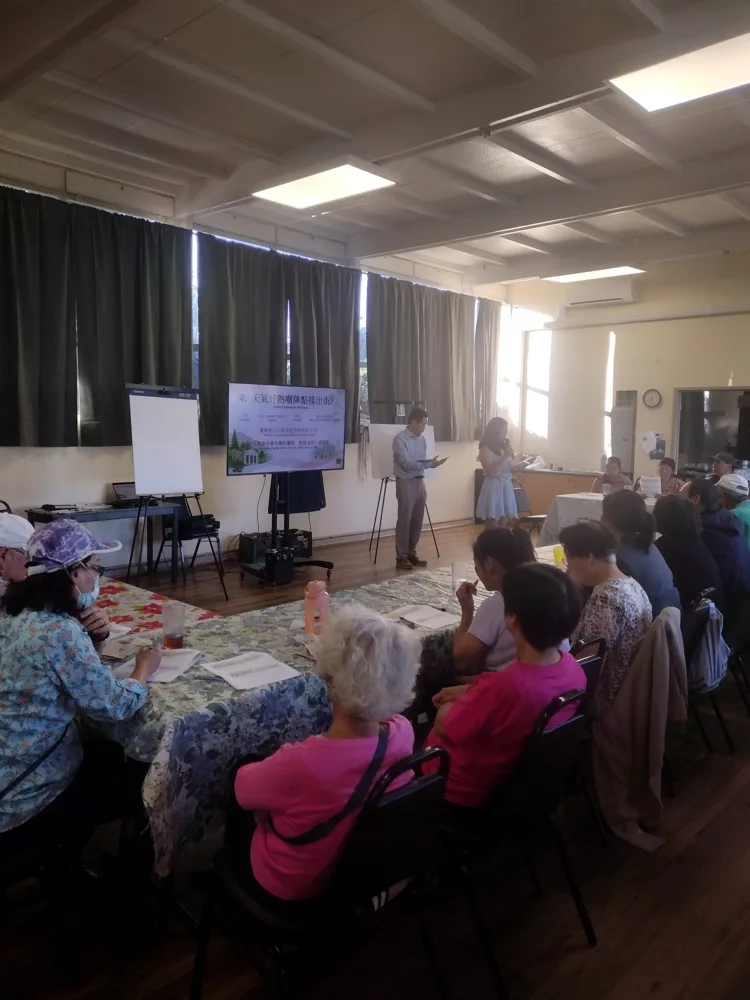
A room that remains hot at night. A bench missing at a place to wait. A library visit that combines cooling with reading. An errand moved to another hour. A call to a neighbor.
These details help turn a broad heat-resilience goal into questions that can be investigated and acted on.
Residents should be able to recognize their experiences in the findings and see what happens after they share them.
Source reference · Booklet page 24
Community accounts summarized in this booklet; session photo EHG-090.
PROPOSED NEXT STEPS
Five areas
for practical follow-through
Recommendations from this review for advisory discussion, not adopted commitments.
1. Review cooling places. With residents and operators, assess comfort, seating, hours, water, restrooms, welcome, cost, and the journey at a few sites.
2. Check exposed waiting places. Verify resident-identified stops or crossings, then assess shade and seating at the times people use them.
3. Clarify home-cooling barriers. Understand equipment, room conditions, costs, and access to help before selecting an intervention.
4. Test Cantonese-accessible messages. Try a short message through more than one channel and check what residents understand and can do.
5. Pair planting proposals with care plans. Make species, placement, expected shade, mature size, and maintenance responsibility explicit.
Source reference · Booklet page 25
Recommendations derived from pages 7-23; not a participant ranking.
TARGETED FOLLOW-UP
Ask the questions
that change a decision
A focused next conversation can strengthen the work without repeating the whole session.
For cooling-place users and nonusers: Where have you actually gone during heat? What helped you stay, or stopped you from going?
For people with different home conditions: Which room is hardest, at what time, and what becomes difficult? What makes a comparatively cool home work well?
For walkers, transit riders, and drivers: Which exact part of a trip is hardest? Where do you wait, and for how long?
For households facing cooling costs: What kind of help would change what you can do? What has happened when you tried to find assistance?
For people with different information habits: Which message did you actually notice, understand, and act on?
Include contrasting circumstances deliberately. More detailed qualitative follow-up would test the interpretation; it would still not create a representative population estimate.
Source reference · Booklet page 26
Review recommendations informed by the workbook follow-up and verification records.
MAKING PROGRESS VISIBLE
Measure whether
the response works
Suggested learning measures for a future pilot or site review.
Cooling places. Record usable hours, amenities, resident-reported comfort, and reasons people choose not to use a site.
Waiting and walking. Record exact locations, shade at relevant hours, seating, and residents' descriptions before and after a change.
Home-cooling assistance. Record barriers, completed referrals, and whether households say the help changed their ability to cool the home.
Communication. Check reach and comprehension separately. Ask what action people understood and whether information was accurate when needed.
Tree proposals. Record concerns, how they were addressed, and whether care responsibilities are understood.
These measures are proposals. The session did not evaluate services or establish a program baseline.
Source reference · Booklet page 27
Editorial evaluation proposal derived from the listening-session findings.
FOR THE ADVISORY CONVERSATION
Carry the listening
into the next decision
Questions for shared discussion across the community listening sessions.
Where do the sessions converge? Which needs also appear in other communities, and which details require a different local or language-specific response?
What can be checked next? Select a manageable site review, route check, communication test, or assistance inquiry. Name the question it should answer.
Who can help make it concrete? Identify willing partners and the information they need. Do not imply a facility, resident, or organization has agreed before they have.
How will residents hear back? Decide how to report what was heard, what will be explored, what cannot move forward yet, and why.
The Cantonese session contributes experience and practical questions to this wider discussion. The next step is to connect that knowledge with responsible people, feasible options, and visible follow-through.
Source reference · Booklet page 28
Proposed advisory discussion prompts based on this review.